Dr Georgia Pike-Rowney and Emeritus Professor Elizabeth Minchin (Supplied: ANU)
This article originally appeared on the ABC News website, 28 February 2026. Read full story here.
It doesn't look like much from the outside, but the inside of the Australian National University Classics Museum is akin to peering into the cupboards of a kitchen from 2,000 years ago.
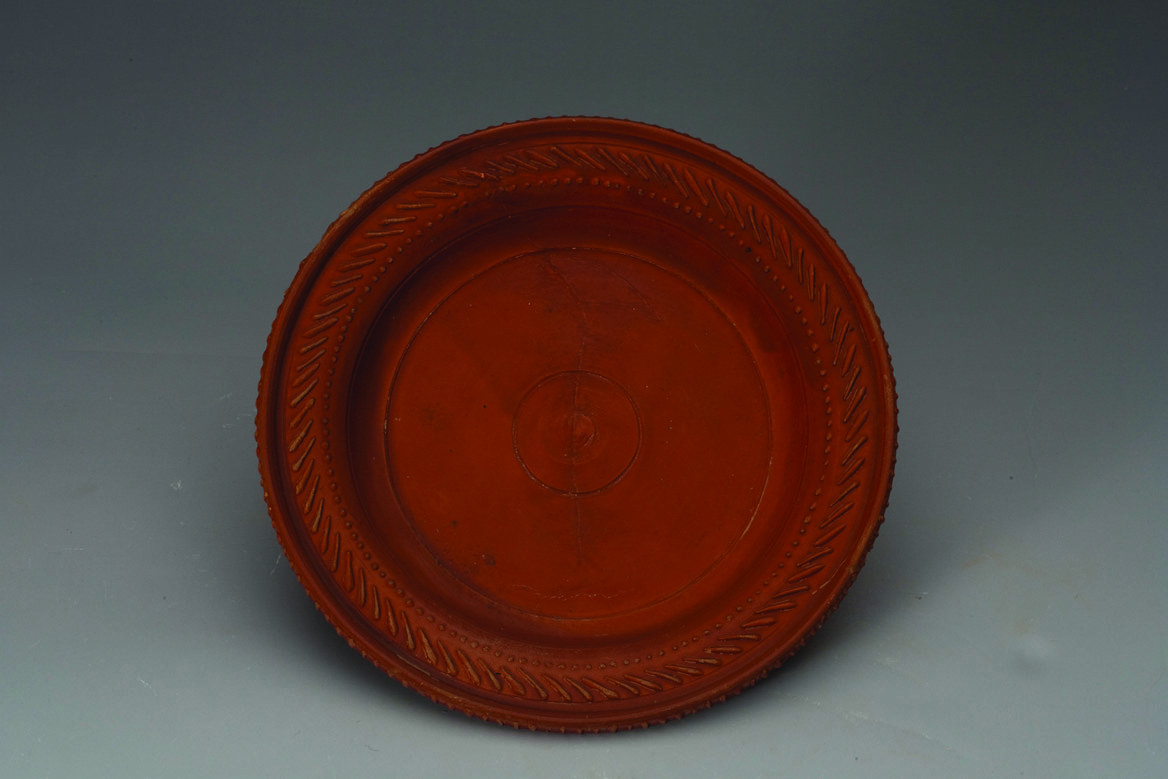
The collection has all the latest interior decor, gadgets and gizmos for living during ancient Greek and Roman times — a sieve used to make cheese, a plate, a bottle for oil, and something that looks remarkably like a Pyrex pie dish.
The ordinary nature of these everyday objects is extraordinary.
"This is a strigil. It's what you used when you went to the baths," Emeritus Professor Elizabeth Minchin said, pointing to an object with a curved, blunt blade.
In a world without soap, this was what you washed yourself with.
"You oiled yourself down. If you'd been out working outdoors, you rubbed yourself over with some kind of clay compound. Then you scraped it off and rinsed yourself down," Professor Minchin said.
"I really don't want to think about the baths with that kind of oily scum on top."
The purpose of the museum, which is open to both the public and to Australian National University (ANU) students, is to bring ancient history to life.
For curator Georgia Pike-Rowney, the museum is where she handled her first ancient object in the 'Artefacts in Everyday Life' course taught by Professor Minchin.
"Elizabeth [Michin] gave me a red slipped Roman dish. And she said, turn it over," Dr Pike-Rowney said.
"It had these marks and she said, 'Now put your fingers over them. Those are the fingerprints of the slave who dipped it into the red slip'.
"Just to see that this is where they would have held it and dipped it in makes it very real. You can read articles about potters working in ancient Rome, but to be part of that action is really important."
'Too risky' for the museum to keep collecting
The ANU Classics Museum started in 1962 with a vision. Professor Richard Johnson, the ANU's first Professor of Classics, believed students who could not travel overseas should still be able to hold objects from the world they were studying.
Without funds to buy big pieces, they focused on collecting everyday objects — and over the years, curators have collected over 600 artefacts.
Everything in the museum's teaching collection can be touched, held and closely examined to connect to the history and the story.
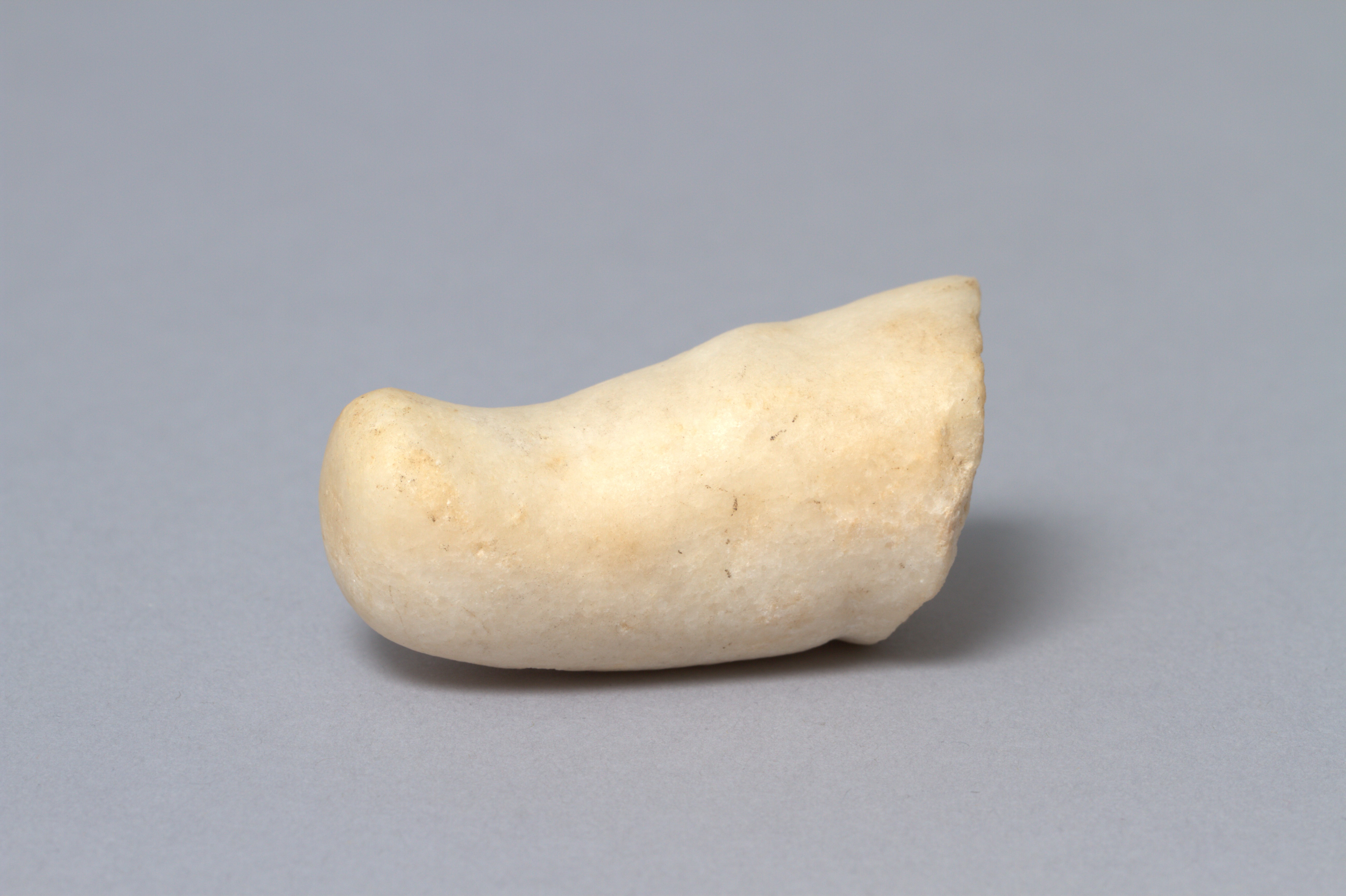
Dr Pike-Rowney's favourite piece is a big marble toe found at Jebel Khalid, an archaeological site in Syria, which has since been very badly damaged by ISIS.
"What's interesting about this object is that this kind of marble was never available in Syria," she said.
Small fragments were analysed and found to be Parian marble, from the island of Paros in the middle of the Aegean Sea, yet it was found in the Temple Precinct in Jebel Khalid.
Artefacts with a story to tell
According to Dr Pike-Rowney, the marble toe is special because we know exactly where it was found, which makes tracing its story possible.
"The ancient world was a dynamic place — with a lot of change and movement and objects and people and materials, and this little piece speaks exactly to that," she said.
It's just one of the reasons looting is so damaging.
Often, when an object is looted, the context around it is lost — the information about where it was found, how it was buried, and what surrounded it.
That context is the archaeology, and without it, a large part of the artefact's story disappears.
Like many museums, questions around how ancient objects are acquired have led the ANU Classics Museum to stop collecting altogether.
Dr Pike-Rowney described it as moving "from acquisition to activation" — the museum has enough, and what matters now is what it does with what it has and what it teaches.
"We've had some repatriation cases that have come to our attention that we need to manage, and basically it's just too risky," she said.
"Instead, what we're doing is we're raising awareness about the ancient illicit antiquities market, and trying to prevent this kind of thing from happening into the future."
The shift is deliberate and principled.
"The world of museums has changed a lot, particularly in terms of antiquities and particularly the ethics around collecting ancient objects," Dr Pike-Rowney said.
Image Gallery